
by the Boris Kagarlitsky International Solidarity Campaign
June 14, 2026
Conditions for political prisoners in the Russian Federation and the territories it occupies have deteriorated sharply with the prolongation of the war on Ukraine.
Those accused and convicted of weakening the war effort under an assortment of fabricated charges are receiving longer sentences, detainees are being rearrested to prolong their prison time, there are accounts of sleep and food deprivation, and torture is routine.
Most recently, the abysmal treatment of mathematician Azat Miftakhov has been brought to international attention. Detained since 2019 on a series of trumped-up charges, including hooliganism and justifying terrorism, he is currently confined to a high-security prison in the Arctic Circle (Kharp, IK-18).
According to direct testimony on April 21, 2026, Azat was subjected to atrocious physical and psychological abuses designed to break his will. He was force stripped, bound, suffocated, beaten repeatedly, shocked with electric current, and sexually violated.
Miftakhov’s case, and that of Bakhrom Khamroyev, also held in Kharp, are among those confirming a disturbing deterioration in the conditions faced by men and women jailed and persecuted for expressing opposition to the war. Six political prisoners, ranging in age from 43 to 65, died in Russian state custody in the first four months of 2026 alone.
Already in fall of 2024, Mariana Katzarova, Special Rapporteur on the situation of human rights in the Russian Federation, reported that “torture is used as a State sanctioned tool for systematic oppression, to maintain control and to stifle dissent.”
The gross mistreatment of political prisoners, who number in the thousands, has gone had in hand with an intensification of internal repression by the Putin regime, which, in turn, is expanding the prison population both in Russia and in the territories it occupies. Ukrainian civilians held as prisoners are also among the Kremlin’s victims.
“The net of repression is being cast wider than it was in the first year of the war, in response to the fear of growing internal resistance, and any pretext will do, explained exiled Russian journalist and antiwar activist Alexey Sakhnin. “ ‘Extremism’ can mean criticism of the government; ‘Terrorism’ can mean discussing political texts.”
Moreover, according to Sakhnin, the focus of repression has shifted from middle-class political activists to a broader swath of the population, encompassing the working class and the poor, who are increasingly discontent with the protracted war and the deteriorating social conditions it is producing.
By mid-2025, according to the Re: Russia network, the number of politically motivated convictions on political charges had increased by 80 percent compared with 2024. More young people, including minors, are also being arrested, tried and convicted, notably the young anti-war activists in the so-called Vesna case and the group of poets found guilty of “fomenting hatred”.
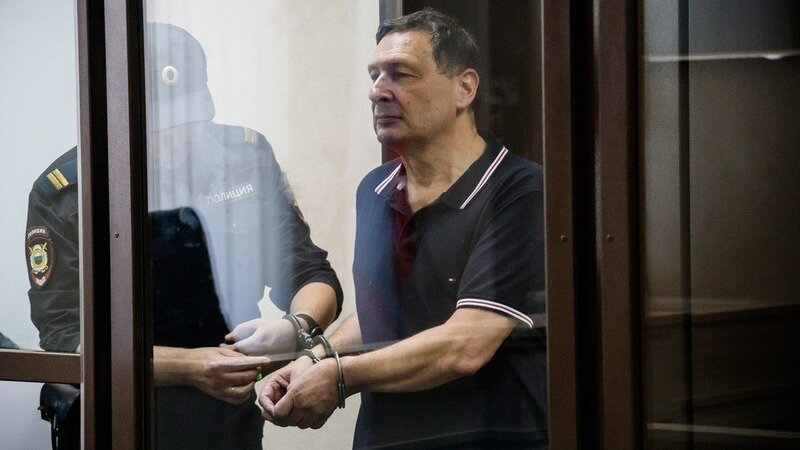
The Boris Kagarlitsky International Solidarity Campaign is extremely concerned about the implications of these disturbing developments for Boris Kagarlitsky himself, who remains in prison, having served over two years of the five-year sentence unjustly meted out to him by a military court for a sarcastic remark he made in 2022 about the Crimean bridge explosion (“justification of terrorism” in the eyes of Russian law).
We also fear for the welfare of all the other prisoners subjected to the brutal conditions of the Russian penal system and we urge closer collaboration among all organisations defending their rights with a view to increasing the political pressure on the Putin regime as much as humanly possible.