
website hit counter

Iran: A Sense of Déjà Vu

Audio & Video, Community Events No Comments

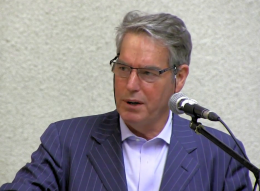
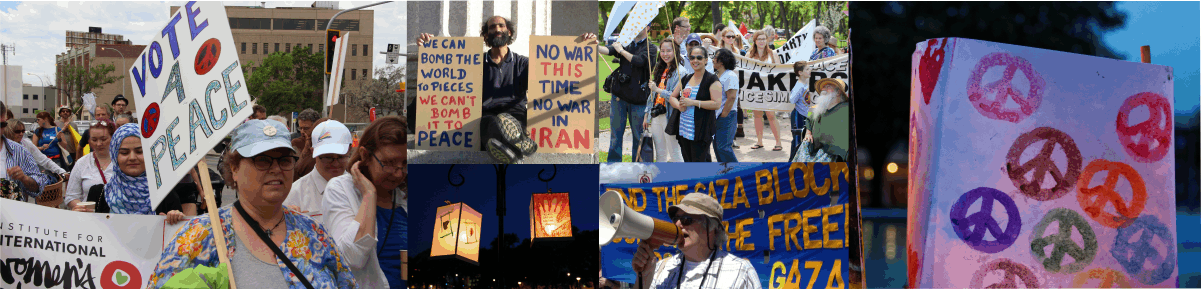
Aug. 28, 2010: Glenn Michalchuk, chair person of Peace Alliance Winnipeg, speaks about the growing danger that the United States will attack Iran. The event was a rally organized by Crazy for Peace 2010 at the Manitoba Legislature in Winnipeg, Canada. The text of Glenn’s speech follows.

My name is Glenn Michalchuk and I am chair of the Peace Alliance Winnipeg. I want to thank the organizers of today’s action for giving the Peace Alliance an opportunity to speak and give our views on this most serious question.

The initiative taken by Crazy for Peace is important because of the need to make people aware that the danger of war against Iran is real and that we must do everything possible to prevent it from occurring.

If we are to learn anything from the disasters of Afghanistan and Iraq it is that we are not isolated from these events. Canada played a major combat role in the 1991 invasion of Iraq, a support role in the 2003 war in Iraq and became directly involved in the occupation of Afghanistan through its current combat role. Given this history one would expect that Canada would be a participant or certainly support any action taken against Iran.

What danger does this represent? The entire Middle East and Central Asia have become a major zone of conflict between the major powers and the emerging powers of that region such as Iran. The U.S. – far from re-shaping the politics of Iraq to suit its political control of the region – is faced with a deteriorating situation that threatens its interests. The main ally of the United States – Israel – is facing increasing political isolation in the world over its continued denial of the rights of the Palestinian people and its brutal siege of Gaza.

As Iraq and Afghanistan have shown plans for régime change are not easily achieved even with massive military intervention at the cost of billions of dollars and hundreds of thousands of civilian deaths. The lies and deceit behind the invasion and occupation of Iraq are well known and Afghanistan is now becoming the same even though some still try to justify NATO’s support for the corrupt Kharzai régime as bringing “democracy” to that country.

There is a sense of déjà-vu with what is happening with Iran. With Iraq it was the fictitious Weapons of Mass Destruction and 9/11. With Afghanistan it was the “War on Terror” and Al-Qaida. Now, with Iran it is nuclear weapons and Iran’s so-called threat to world security.

There is a very real danger that the United States, acting alone or with allies, will take military action against Iran. As with Iraq and Afghanistan its aim would be to effect régime change to ensure its political and military domination of the Middle East, the Persian Gulf and Central Asia. There is a very real danger that such a war could lead to a larger conflict.

In the current situation with Iran who is rattling the sabers and threatening war? It is the same countries and alliances that brought war to Yugoslavia in the 1990′s, Iraq on two occasions and Afghanistan. Can we believe these countries now when they make Iran the villain?

Given the current government it is very likely Canada would be part of such a conflict in some way.

The point of today’s action and other actions is to change this course. Canada does not yet have a foreign policy that is independent of the United States or its interests. Canada does not yet have a foreign policy based on the settlement of differences by peaceful and diplomatic means or to show leadership internationally on this.

The most recent history of Iraq and Afghanistan shows that these wars are carefully prepared and managed. Before that, in the 1950′s, the democratic government of Iran was overthrown by the British and the United States and a brutal dictatorship installed to protect access to Iranian oil and control of the Persian Gulf. Not that long ago the countries of South America were under military dictatorships loyal to Washington. The US openly bragged of its overthrow of Allende and the installation of Pinochet who was shielded from international justice even after his regime ended. Cuba has faced decades of economic sanctions and attempts to overthrow its government.

So people need to be aware that the big powers are attempting to drive events to protect their interests not the interests of any people or nation state. When there is talk of wars to protect human rights or to protect democracy we need to know that this is not the real history of intervention and conflict.

The majority of countries in the world have urged a peaceful resolution to the issues of nuclear development as it pertains to Iran. Only a minority – Canada being one – are raising the stakes and demanding ever new concessions and terms from Iran. If that sounds familiar it should — it is exactly what happened with UN inspections of Iraq in the months before the 2003 war. And if that is not sufficient there is always the hysteria of terrorism to convince the people that “something needs to be done”.

A few weeks ago at the ceremony to commemorate the dropping of the atom bombs on Hiroshima and Nagasaki Member of Parliament Bill Siksay spoke of the need to develop a new attitude in Canadian foreign policy as part of the initiative to form a Department of Peace dedicated to a new role for Canada in international relations.

Certainly Canada has never played such a role internationally on a consistent basis. Its “peacekeeping” efforts have often been tagged with other considerations. Certainly its role in the last two decades has shifted to more aggressive military capabilities as part of its commitment to the NATO alliance which is strengthening its reach and ability to act independently of any considerations of the United Nations, international opinion or international law.

There is already a suggestion that Canada will continue to remain in Afghanistan to support the Kharzhai regime.

It is a big challenge to change the direction of Canadian policy. Nonetheless that is the challenge before us. Another challenge before is to ensure that another war does not erupt over the issue of Iran.

Thank you for coming today.

Thank you for being part of this effort to stop the growing danger that the U.S and others will begin a war with Iran. The cause of peace and justice in the Middle East – and elsewhere – can only be served if interference by the world’s powers stops and people are allowed to solve their problems with their own initiatives.

Crazy for Peace 2010: Say “No” to war with Iran

Audio & Video, Community Events No Comments

The following is the video and the text of the speech given by Christina Petriuk, a member of Crazy for Peace 2010, at a rally held on Saturday, Aug. 28, 2010, in Winnipeg. The purpose of the rally was to raise awareness of the danger of war with Iran and the risk that it could escalate into a world war fought with nuclear weapons. To contact Crazy for Peace, email crazyforpeace2010@hotmail.com, or visit their Facebook page.

“If you are not outraged, you are not paying attention.”

Years and years ago I read that on a bumper sticker on some little car here in Winnipeg, and it hit me that day when I read it. The first thing I thought when I read it was, well, I’m not outraged, but don’t tell me I’m not paying attention. I DO pay attention. And then I asked myself, ok, if I really am paying attention, why am I not outraged?

I’m glad to see you here today because it’s clear by your presence that you are outraged, and by extension it means you have been paying attention. And that you are here today because you want other people who are not outraged, to start paying attention, really paying attention. It’s possible that you were ambivalent about showing up today – perhaps you thought about staying home or going somewhere else – perhaps there are people who you care about who don’t share your interest in being here, who even ridicule you for your intention to come here, and you feel you have to separate yourself from them by being here. That’s good – it doesn’t say you are separating yourself from a society you care about and want a place in, by choosing to be here – it rather shows your strength of character, your ability to make a completely independent decision and feel good about your decision and yourself. It shows that you have emerged as a leader for that society that you care about. It shows that more than ever you belong to that society and that you are committing to taking care of it. And you see that you are not the only one here today, and you have met good people here this week who you respect and whose respect you are glad to have. And you can go back to your friends and families having participated in these actions today and you can belong with them and they will surprise you when they say, “Actually, I respect you for standing up for what you believe in.” And you can be certain that your relationships with those people will have changed now, that they ask for your opinion or for you to explain things in the news to them, and one day maybe your brother or your niece or your neighbour will indeed come with you to these peace events. So I hope everyone here today feels glad that they came, and feels good about themselves. I know you know you’re doing the right thing by standing up and saying, “That’s right – I’m against war. Is that crazy? Is there something wrong with that?” Which brings me to my next bumper sticker.

“The middle of the road is for dotted yellow lines and roadkill.”

What is the dotted yellow line? The line on the road that divides two clearly different directions. What happens to any poor creature that stands in the middle of the road in the way of speeding traffic in both directions? Not long before it’s roadkill. Nothing and no one belongs in the middle of the road. Ever. What about us? Are we going to stand in the middle of the road, afraid to choose a lane, afraid to commit to an opinion and to a belief system? oblivious to the dangerous consequences of not choosing a direction? ambivalent until we notice that Canada sends troops to support another hopeless war effort in the Persian Gulf? and then we cry out when it’s too late, that we disapprove of where our tax dollars are going, that we didn’t vote for a war? Why wasn’t there a vote on going to war? we wouldn’t have voted for war. Choose a lane right now. There’s one lane that goes in the direction of “Nuke ‘em, nuke the f’ers” and there’s another lane that goes in the direction of “Over my dead body – right now I am voting against war.”

This week I HAVE heard lots of people saying they’re against war, but some of those same people are saying they haven’t heard anything about war in Iran being a possibility. I say, yes you have, it just hasn’t hit you yet. Have you heard in the news about human rights abuses against women in Iran at the hands of the fundamentalist Islamic government? Have you heard about schools being bombed where girls are pupils? Have you heard about terrorist acts? Have you heard about men’s haircuts being regulated to cut off western-style locks? (Full beard with no mustache the preferred style.) Have you heard about Iran’s nuclear power plants ready to start functioning? Have you heard of round after round of economic sanctions against Iran recently? Then you’ve heard the warning signals that the US and Israel consider Iran a deserving target of punishment, and you have heard the sabres rattling of those allies of power and commerce and economic control in the Middle East. You have heard the announcements that war on Iran is coming. You have had déja vù because you have seen the whole charade before, and its ultimate goal. You have seen it with Iraq and you have seen it with Aghanistan. And you have seen what it accomplished, and what it did not accomplish. And you are seeing it now again with Iran. You have heard lots about war on Iran in the near future.

Is Crazy for Peace for or against Iran? Neither. We’re against war, anywhere, for whatever reason. We know Iran has a crappy human rights record that it is building on right now, and that Iran’s leaders are indeed leading the way with human rights abuses. We also know Iran has a crappy relationship with the US. The country and the region that has a peaceful relationship with the US – a relationship in which a country or a region agrees not to thwart the US economically or politically – is a country or a region that has no fear of military attack from the US or US-supported allies. Think all of western Europe and Canada and Mexico, North America. The country or region that has not agreed to be an economic partner of the US will always be in a precarious state of armed peace with the US – a term you might recognize better is, it is “an unstable region.” Regions declared unstable by the US are under threat of being made “stable” by the US. Being made “stable” for the US begins with de-stabilization of the recalcitrant state. The formula is by now predictable. Step 1: Frighten the public – begin with media reports of human rights abuses and media reports of Islamic terrorism and media reports of suspected nuclear weapons or weapons of mass destruction being stockpiled Step 2: Follow up with economic sanctions. Step 3: Encourage an internal military coup against the elected government. Step 4: Wage military war “as a last resort.” Starting to sound familiar? Iraq… Afghanistan… North Korea… Cuba… Venezuela… 1970’s Chile… Nicaragua… Palestine… Recognize the signs, distill the underlying message from the version being channelled into your homes by the media. Identify the pattern. Realize you are slowly being manipulated into supporting this bull. And it is bull. I hate being made a sucker. Don’t you? Don’t be so easily suckered into believing at face value whatever message is passed to the media in a government news release, and are then printed in your local daily newspaper. Don’t be so easily suckered into believing Iran needs to be attacked. If you find yourself saying at animated family dinner conversations, “Explain it to me again – why are they attacking so-and-so?” give yourself some credit and realize that you’re asking the right question. And realize that the reason you can’t remember and don’t understand the logic behind a military attack is because the logic is tenuous, the reasons aren’t good ones, the reasons aren’t morally correct reasons, the reasons aren’t based in Right and Wrong. The reasons are based on complicated economic and power issues that you have heard nothing about, and you haven’t heard these true reasons because the truth would outrage you in its clarity.

Countries that are rich enough and powerful enough to piss off the US and that do piss off the US immediately become “unstable.” We’re seeing Iran in action pissing off the US. They are rich in petroleum, and they are regaining control of their own natural resource. They are building nuclear power plants, NOT for weapons (maybe true, maybe not true), but for energy. They have been ordered by Israel and the US to halt and to dismantle their nuclear energy plans. They have refused to do so. Their power is directly born out of this resistance to bow to US and Israeli pressure. They have become an unstable region for the US. Economic sanctions against Iran began last year and are in their fourth round. Iran continues to resist. Their instability and their power thus continues to grow. Their threat to Israel is great. Israel is supported by the US. Israel warns it will attack Iran’s nuclear energy plant. Iran counters that it will not retreat from the threat – it will defend itself with whatever means it has.

This is war.

And it started with us, recall, believing wholesale what we’re told about the threat of Iran, the threat of terrorism, and how the enemy has to be attacked in order to protect the rest of us. In order to return the region to US control. Yes, you want to be protected. But do you require a region to be under US control? Feeling safe and being controlled by the US do not necessarily have to go hand in hand. What does feeling safe have to do with Wal-Mart and McDonald’s and US hotel chains gaining control of the landscape of popular foreign tourist beach destinations?

Crazy for Peace 2010 was born to promote awareness of plans for a US or US-backed war on Iran that is brewing right now with respect to Iran. We protest, you protest, and do we have an impact on decision-making? Will the Canadian government listen to us when the question arises, “How many troops will Canada commit to a US war zone?” Certainly not. But political lifespans are short – eight years at most in the US, and Canadians are fickle voters – we have a minority federal government for the last while. Time flies and before they know it there’s another election around the corner. Pleasing the voters becomes paramount if a party or candidate is to secure its place once again. We all need a paycheque, right? So too does the elected official. Speak out with Crazy for Peace 2010. Speak out yourselves, to your friends and to your families. Our protests will be noticed. Politicians might not care about your feelings per se, but they do care about how your feelings influence your vote. If you say you’ll vote them out over a bad decision on the issue of going to war in Iran, they’ll think about that paycheque they want after the next election and they’ll move heaven and earth to avoid going to war. To get your vote to keep their paycheque. Votes, elections, paycheque, power. That’s where Crazy for Peace comes in, and that’s where you come in.

Read between the lines. If you’re not outraged, you’re not paying attention. Pay attention, choose a lane, make it clear you’ll vote according to which lane you’re in. Don’t be middle of the road. Middle of the road is for yellow dotted lines and roadkill.

America’s war on terror comes home to roost

Opinions and Debates No Comments

The Nazification of the United States

By Paul Craig Roberts, Counterpunch, Aug. 27-29, 2010

Chuck Norris is no pinko-liberal-commie, and Human Events is a very conservative publication. The two have come together to produce an important article, “Obama’s US Assassination Program.”

It seems only yesterday that Americans, or those interested in their civil liberties, were shocked that the Bush regime so flagrantly violated the FlSA law against spying on American citizens without a warrant. A federal judge serving on the FISA court even resigned in protest to the illegality of the spying.

Nothing was done about it.  “National security” placed the president and executive branch above the law of the land. Civil libertarians worried that the US government was freeing its power from the constraints of law, but no one else seemed to care.

Encouraged by its success in breaking the law, the executive branch early this year announced that the Obama regime has given itself the right to murder Americans abroad if such Americans are considered a “threat.”  “Threat” was not defined and, thus, a death sentence would be issued by a subjective decision of an unaccountable official.

Article continues . . .

8th Annual Sol Kanee Lecture on International Peace and Justice

Upcoming Events No Comments

8th Annual Sol Kanee Lecture on International Peace and Justice

with Distinguished Speaker Dr. Pumla Gobodo-Madikizela, University of Cape Town

Topic: “Exploring Narratives of Repair and Healing in the Post-Holocaust Era”
Date: Wednesday, September 29, 2010
Time: 1:30 p.m.
Place: Manitoba Room, 2nd Floor University Centre, University of Manitoba
Free Admission | Parking is extremely limited—Public transportation is highly recommended

More information: Mauro Centre

See also: Pumla Gobodo-Madikizela

Backgrounder: The U.S. – Iran Standoff

Opinions and Debates No Comments

By CASMII, August 16, 2010

The current U.S. standoff against Iran, like the run-up to the invasion of Iraq in 2003, was instigated by the neoconservatives of the Bush Administration based on their doctrine of “maintaining U.S. pre-eminence, thwarting rival powers and shaping the global security system according to U.S. interests”. In the case of Saddam’s regime, its fictitious Weapons of Mass Destruction (WMD) and its alleged links to Al-Qaida were used in the U.S. propaganda war to first impose U.N. sanctions and eventually invade Iraq. We now have a déjà vu situation in which the U.S. and its allies, prodded by Israel, demonize Iran as a threat to world security and accuse it of having a program to develop nuclear weapons. As with Iraq, the real aim is a regime change in Iran to set up a U.S. puppet government in this oil- and gas-rich country in the key strategic Persian Gulf region. This has also happened before in the 1953 U.S.-British coup in Iran. The same forces in U.S., U.K., Israel and allies today distort the truth and engage in deceit, coercion and aggression to achieve their goals. We will briefly examine some of the key facts in the standoff.

Article continues . . .

March against war with Iran

Upcoming Events 1 Comment

Date: Saturday, August 28, 2010

Times:

11:00 a.m. – 1:00 p.m.: Program features music performed by Winnipeg’s famed Papa Mambo

1:00: March begins

Place: Manitoba Legislative Building, Winnipeg, MB

Organized by: Crazy for Peace

In preparation for the Saturday march, Crazy for Peace will hold a series of rallies at the Manitoba Legislature:

  • Tuesday, August 24: 12:00 p.m.-2:00p.m.
  • Wednesday, August 25: 12:00 p.m.-2:00 p.m. and 6:00 p.m.-8:00 p.m.
  • Thursday, August 26: 12:00 p.m.-2:00 p.m. and 6:00 p.m.-8:00 p.m.
  • Friday, August 27: 12:00 p.m.-2:00 p.m.

Background

  • Are we crazy for noticing the exponentially mounting world political tension surrounding Iran’s nuclear capacity?
  • Are we crazy for hearing loud and clear the message of the former US ambassador to the United Nations, John Bolton, that Israel has only until Saturday, August 21, 2010 to launch a military attack on Iran’s emerging nuclear power plant?
  • Are we crazy for being alarmed that Iran says it will defend itself against any military attack on its nuclear facility with whatever means it can?
  • Are we crazy for noticing that the Canada Department of Foreign Affairs and International Trade has advised Canadians to “Avoid Non-Essential Travel” to Iran and to “Avoid All Travel” to the “Region” surrounding Iran?
  • Are we crazy for wanting to persuade President Barack Obama not to enter into nuclear attacks against Iran?

Or are others crazy? For not noticing the geo-political and military crucible heating up over Iran’s nuclear power success? or for noticing but not worrying about the fallout of nuclear attacks and counter-attacks in our own cities?
Fine, we’re the crazy ones.

We’re crazy for peace.

Crazy for Peace 2010 emerged in Winnipeg, Canada in August 2010 as a grassroots organization of Latino-Canadians who are alarmed about the growing political and military tensions over Iran’s nuclear power capacity.

Military strikes by Israel or the US against Iran to pre-empt the success of their nuclear power plant have been foretold. Iran warns it will use its own military arsenal to defend itself against any interference with its nuclear power plant. The  deadlock of positions threatens to boil over rapidly as success of Iran’s power plant is imminent at the end of August 2010.

Crushing Iran is the US and Israeli reaction of intolerance to increased power by any state other than the US in the region. After the international debacle caused by the US invasion of Aghanistan and Iraq, who in their right mind would support another US attack in the same region?

Are we crazy for saying, “Oh no, not this time! This time we say  ‘NO’ loud and clear!”

More information:

Help promote the rallies: Download the Crazy for Peace leaflet.

Chalk 4 Peace

Upcoming Events No Comments

Date: August 28, 2010

Time: 2:00 p.m. – 11:00 p.m. (If it rains the event will be postponed until the following day, August 29th.)

Place: Vimy Ridge Park, Winnipeg

Chalk 4 Peace is a global event. It happens in many cities across the planet and spreads to more and more every year.

The first Chalk 4 Peace in Winnipeg was started by Sathya Dhara back in 2007, with help from friends.

Come out and draw some art on the sidewalks and see how the pavement transforms throughout the day. With everything going on in this crazy planet of ours the world can always use a little bit more peace. If anybody wants to get involved and help out in any way that would be awesome, just give us a shout (on Facebook).

Invite your friends and spread the word!

We will be taking donations on-site for War Child Canada.

There will be bands (acoustic), drum jams, face painting, fire spinning and some other surprises.

More information on Facebook.

Bill Siksay speaks for a Canadian Department of Peace

Audio & Video, Manitoba News, Opinions and Debates No Comments

redriverpete | 08 August 2010

Aug. 6, 2010: Member of Parliament Bill Siksay was the keynote speaker at Winnipeg’s annual Lantern Ceremony, held to commemorate the atomic bombing of Nagasaki and Hiroshima. His topic: a private member’s bill before the House of Commons calling for the creation of a federal Department of Peace.

For more information, visit the Campaign to Establish a Canadian Department of Peace.

Why America dropped “The Bomb”

Opinions and Debates No Comments

Why World War II ended with Mushroom Clouds
65 years ago, August 6 and 9, 1945: Hiroshima and Nagasaki

The Hiroshima Peace Memorial (Genbaku Dome) was the only structure left standing in the area where the first atomic bomb exploded on 6 August 1945. Through the efforts of many people, including those of the city of Hiroshima, it has been preserved in the same state as immediately after the bombing.

by Jacques R. Pauwels, Global Research, August 6, 2010

On Monday, August 6, 1945, at 8:15 AM, the nuclear bomb ‘Little Boy” was dropped on Hiroshima by an American B-29 bomber, the Enola Gay, directly killing an estimated 80,000 people. By the end of the year, injury and radiation brought total casualties to 90,000-140,000.[1]

On August 9, 1945, Nagasaki was the target of the world’s second atomic bomb attack at 11:02 a.m., when the north of the city was destroyed and an estimated 40,000 people were killed by the bomb nicknamed ‘Fat Man.’ The death toll from the atomic bombing totalled 73,884, as well as another 74,909 injured, and another several hundred thousand diseased and dying due to fallout and other illness caused by radiation.[2]

In the European Theatre, World War II ended in early May 1945 with the capitulation of Nazi Germany. The “Big Three” on the side of the victors – Great Britain, the United States, and the Soviet Union – now faced the complex problem of the postwar reorganization of Europe. The United States had entered the war rather late, in December 1941, and had only started to make a truly significant military contribution to the Allied victory over Germany with the landings in Normandy in June 1944, less than one year before the end of the hostilities. When the war against Germany ended, however, Washington sat firmly and confidently at the table of the victors, determined to achieve what might be called its “war aims.”

As the country that had made the biggest contribution and suffered by far the greatest losses in the conflict against the common Nazi enemy, the Soviet Union wanted major reparation payments from Germany and security against potential future aggression, in the form of the installation in Germany, Poland and other Eastern European countries of governments that would not be hostile to the Soviets, as had been the case before the war. Moscow also expected compensation for territorial losses suffered by the Soviet Union at the time of the Revolution and the Civil War, and finally, the Soviets expected that, with the terrible ordeal of the war behind them, they would be able to resume work on the project of constructing a socialist society. The American and British leaders knew these Soviet aims and had explicitly or implicitly recognized their legitimacy, for example at the conferences of the Big Three in Tehran and Yalta. That did not mean that Washington and London were enthusiastic about the fact that the Soviet Union was to reap these rewards for its war efforts; and there undoubtedly lurked a potential conflict with Washington’s own major objective, namely, the creation of an “open door” for US exports and investments in Western Europe, in defeated Germany, and also in Central and Eastern Europe, liberated by the Soviet Union. In any event, American political and industrial leaders – including Harry Truman, who succeeded Franklin D. Roosevelt as President in the spring of 1945 – had little understanding, and even less sympathy, for even the most basic expectations of the Soviets. These leaders abhorred the thought that the Soviet Union might receive considerable reparations from Germany, because such a bloodletting would eliminate Germany as a potentially extremely profitable market for US exports and investments. Instead, reparations would enable the Soviets to resume work, possibly successfully, on the project of a communist society, a “counter system” to the international capitalist system of which the USA had become the great champion. America’s political and economic elite was undoubtedly also keenly aware that German reparations to the Soviets implied that the German branch plants of US corporations such as Ford and GM, which had produced all sorts of weapons for the Nazis during the war (and made a lot of money in the process[3]) would have to produce for the benefit of the Soviets instead of continuing to enrich US owners and shareholders.

Article continues . . .

Hiroshima Peace Declaration 2010

World News No Comments

By Tadatoshi Akiba, Mayor, The City of Hiroshima, August 6, 2010

In the company of hibakusha who, on this day 65 years ago, were hurled, without understanding why, into a “hell” beyond their most terrifying nightmares and yet somehow managed to survive; together with the many souls that fell victim to unwarranted death, we greet this August sixth with re-energized determination that, “No one else should ever have to suffer such horror.”

Through the unwavering will of the hibakusha and other residents, with help from around Japan and the world, Hiroshima is now recognized as a beautiful city. Today, we aspire to be a “model city for the world” and even to host the Olympic Games. Transcending the tortures of hell, trusting in the peace-loving peoples of the world, the hibakusha offer a message that is the cornerstone of Japan’s Peace Constitution and a beacon to the world.

The results of the NPT Review Conference held this past May testify to that beacon’s guiding influence. The Final Document expresses the unanimous intent of the parties to seek the abolition of nuclear weapons; notes the valuable contribution of civil society; notes that a majority favors the establishment of timelines for the nuclear weapons abolition process, and highlights the need for a nuclear weapons convention or new legal framework. In doing so, it confirms that our future depends on taking the steps articulated by Hiroshima, Nagasaki, the more than 4,000 city members of Mayors for Peace, and the two-thirds of all Japanese municipalities that formally supported the Hiroshima-Nagasaki Protocol.

That our cry of conscience, the voice of civil society yearning for a future free from nuclear weapons, was heard at the UN is due in large measure to the leadership of His Excellency Ban Ki-moon, who today has become the first UN Secretary-General to attend our Peace Memorial Ceremony. President Obama, the United States government, and the 1,200-member U.S. Conference of Mayors also wielded their powerful influence.

This ceremony is honored today by the presence of government officials representing more than 70 countries as well as the representatives of many international organizations, NGOs, and citizens’ groups. These guests have come to join the hibakusha, their families, and the people of Hiroshima in sharing grief and prayers for a peaceful world. Nuclear-weapon states Russia, China and others have attended previously, but today, for the first time ever, we have with us the U.S. ambassador and officials from the UK and France.

Clearly, the urgency of nuclear weapons abolition is permeating our global conscience; the voice of the vast majority is becoming the preeminent force for change in the international community.

To seize this unprecedented opportunity and actually achieve a world without nuclear weapons, we need above all to communicate to every corner of our planet the intense yearning of the hibakusha, thereby narrowing the gap between their passion and the rest of the world. Unfortunately, many are unaware of the urgency; their eyes still closed to the fact that only through luck, not wisdom, have we avoided human extinction.

Now the time is ripe for the Japanese government to take decisive action. It should begin to “take the lead in the pursuit of the elimination of nuclear weapons” by legislating into law the three non-nuclear principles, abandoning the U.S. nuclear umbrella, legally recognizing the expanded “black rain areas,” and implementing compassionate, caring assistance measures for all the aging hibakusha anywhere in the world.

In addition, the Prime Minister’s wholehearted commitment and action to make the dreams of the hibakusha come true would lead us all by 2020 to a new world of “zero nuclear weapons,” an achievement that would rival in human history the “discovery of zero” itself. He could, for example, confront the leaders of the nuclear-weapon states with the urgent need for abolition, lead them to the table to sign a nuclear weapons convention, and call on all countries for sharp reductions in nuclear and other military expenditures. His options are infinite.

We citizens and cities will act as well. In accordance with the Hiroshima Appeal adopted during last week’s Hiroshima Conference for the Total Abolition of Nuclear Weapons by 2020, we will work closely with like-minded nations, NGOs, and the UN itself to generate an ever-larger tidal wave of demand for a world free of nuclear weapons by 2020.

Finally, on this, the 65th anniversary of the atomic bombing, as we offer to the souls of the A-bomb victims our heartfelt condolences, we hereby declare that we cannot force the most patiently enduring people in the world, the hibakusha, to be patient any longer. Now is the time to devote ourselves unreservedly to the most crucial duty facing the human family, to give the hibakusha, within their lifetimes, the nuclear-weapon-free world that will make them blissfully exclaim, “I’m so happy I lived to see this day.”

See also: Hiroshima Peace Site

« Previous Entries Next Entries »